It was a quiet moment. Reed was shaving, Ben was taking a bubble bath, and a soot covered Johnny Storm barged in, asking what the heck they were doing?! Were they giving up?
This was in the middle of Fantastic Four issue #49, “If This Be Doomsday”. The middle issue of The Galactus Trilogy, a watershed moment in the history of Marvel comics.
The Marvel Age of Comics kicked off with FF #1 in 1961, by Stan Lee and Jack Kirby, who gave us a world of superheroes living right outside our window. Amazing characters doing amazing things in our “real” world.
The FF was a family of superheroes. Reed Richards, his best friend Ben Grimm, the woman he loved, Sue Storm, and her kid brother, Johnny Storm. They took a rocket up into space, got belted by cosmic rays, and got superpowers. Reed, in addition to being the smartest man in the world, could stretch. Sue could turn invisible, Johnny could flame on and Ben became a rock covered monster.
They tackled a variety of other monsters, madmen, and would be world conquerors. But their adventures up until that point were mostly based in New York City. They’d traveled into space a few times, whether it be the moon, or across the galaxy to square off against intergalactic threats.
But in Fantastic Four issue #48, the *biggest* threat in the universe came HERE, to our own backyard. This was “The Coming of Galactus”, and he was the Devourer of Worlds.
He was preceded by the Silver Surfer, his Herald, who sought out suitable worlds for him to feed on.
When this giant man descended from the heavens, the Fantastic Four rose to confront him.
This family of explorers and adventurers had defeated some of the deadliest, most powerful and dangerous threats known to man. But this was the *unknown*.
They were hopelessly, helplessly outclassed, and were brushed away like insects.
So, they stepped back, regrouped, and got themselves cleaned up. Which brings us back to the bathroom scene.
Usually, when confronted with a world ending threat, some heroes, or teams, retreat to their watchtower, or war room, or their secret hideout, to try and figure out their next move. But those were other teams, other comics, other companies.
The FF got cleaned up while mulling things over with a shave and a scrub.
The juxtaposition between this scene and pretty much every other comic in existence is startling.
Because what they did was normal. Human. Real. THAT was Marvel’s stock and trade.
Their heroes squabbled amongst themselves, had real emotions, real problems, real lives.
They weren’t your typical heroes.
The FF were the first and best of them. They were *family*, and unlike any other superhero team anywhere, before or since.
Oh, they were also incredible heroes in action of course, and have been around for sixty four years, but the essence of these heroes, this family, is just how real they are, and the bathroom scene is a good example of this.
Side note: they eventually did win the day against Galactus, but I’d advise you to do yourself a favor and seek out Fantastic Four issues 48, 49 and 50, and treat yourself.
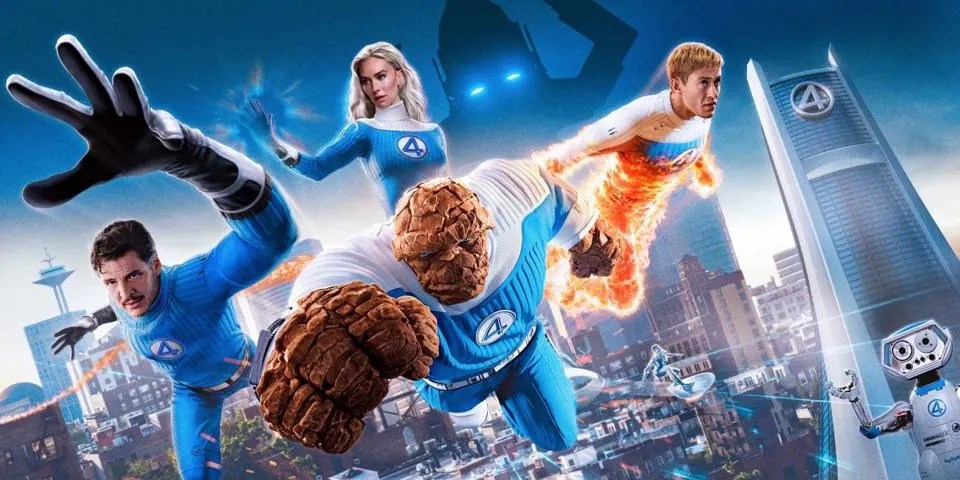
What does this have to do with Fantastic Four: First Steps?
Well, that scene? That essence? The real family, that bond, the love… that is this movie.
That, and suspense, terror, action, humor, and pulse pounding thrills, as they take on the Silver Surfer and Galactus.
It’s no secret that AI has impacted the lives of the art community. But there are many types of art, and different categories of it in the business world. We’re going to take a look at commercial art, specifically, concept ads and advertising storyboards.
We have with us today Rick Lundeen (rickjlundeen@gmail.com), a veteran illustrator with 35 years experience as a storyboard artist. We’re going to get his take on how AI has affected his work, the industry itself, and his thoughts on what’s coming down the road.
Int: Now, to get a better understanding of what you do, Rick, please talk us through a typical project.
RL: Sure — the client (an ad agency) has a project, reaches out to either me or my reps, such as Paul Eberhardt (847-732-7115), checking my schedule/availability. Once things move forward, the client prepares the brief and assembles any reference they have that might be needed. Then they set up a video conference and give me the briefing. We talk it though, frame by frame, or ad by ad. I often ask a lot of questions making sure we’re all on the same page. I then do an initial round of very rough pencils that I send to the agency. They give me feedback, I make any necessary changes, then I go to the finished version, whether that’s tight black and white, full color, or anything in between. The agency takes the finished product and presents to their client, and the ad or storyboard is then produced for media.
Int: What’s the state of advertising storyboards now?
RL: The bizarre thing about this business is its unpredictability. It’s always been feast or famine. During my busiest years, 1998 through 2017/18 I’d had many times where I’d had to juggle three, four, or even five jobs at once, all on tight deadlines, other times, there’d be slow days here, a week there. But over the decades, there have been various factors that have affected the ad industry and chipped away at the volume of work. Photo boards, art directors assembling stuff in Photoshop, the economy, the ability of tv viewers to fast forward through commercials, budgets, the pandemic, etc. AI is just the latest addition to those factors.
Int: Okay——how has AI specifically affected your work?
RL: It’s very difficult to give an accurate percentage or scale, because when we’re up for a project, bidding on it, or it’s just put on our radar, if it goes away or never happens, we usually don’t get informed why. Last year, I had a long drought, and I wondered if AI was responsible. Then I ended up getting several projects from agencies and studios that had gone back into pitching and production mode. Agencies aren’t constantly producing or pitching, they go through different cycles as well. When they do get back to producing, that’s when they would contact us. So, it’s tough to tell exactly *how* big a bite AI’s taken.
Int: Have ad agencies and businesses shown a willingness to use AI?
RL: I know many have used it, and will probably continue to do so. It depends on the art director for one thing. For some AD’s, the whole idea of using AI is repugnant to them. Others don’t mind the controversy, the ethical question, or the impact on the art community. As for businesses, $$$ is the bottom line, and if an agency can cobble together something in AI for a fraction of the cost, the client usually has no problem with spending less. We could do a storyboard and charge $1,000. An ad agency could use AI to do a different version of that same storyboard which would probably cost them nothing, charge the client the same amount out of the art budget and say nothing. Please note that I’m not saying all agencies act in this fashion. The clients who engage us on a regular basis seem to not partake. But each agency is different. Ethics can sometimes be a slippery slope.
Int: You mentioned controversy and the ethical question?
RL: It’s tricky. AI generators study existing works of art in order to produce its own. In essence, it takes other’s artwork and uses it to create images. There’s the ethical question as to whether it’s right to copy and use other people’s artwork for your own ends, and it implies that anyone who uses AI is complicit in some form of theft. Of course, with ad storyboards, it’s art that exists within the middle of the pipeline. Not finished art for display, just to present to the agency’s client. So in effect, that can be hidden away. The agency’s client itself may not even be aware of these developments.
As to the controversy, there are a number of people who feel very passionate about the livelihoods of artists and writers who’ve lost their jobs to AI. In some scenarios, if a business is connected with using AI in any way, there can be a public backlash.
Marvel’s Secret Invasion series on Disney + utilized AI as part of the series’ opening titles, and there was a huge outcry prompting Disney to address the situation. The same with the BBC announcing that certain ads for their tv series Doctor Who were going to be written by AI. They reasoned Who would be an excellent choice for such a “futuristic” experiment. The tone deaf statement once again sparked a backlash so vehement that the BBC hurriedly scrapped those plans.
If the use of AI negatively impacts the corporation’s sales, then it’s up to said business to course correct. A little while back, one of our agencies had a very important project. They told us specifically that their client wanted storyboard frames drawn up *because* of the importance of the client and presentation, indicating a new level of prestige and demand for actual artists crafting the scenes. It was important, and they didn’t want the vagaries and unreliability of AI involved on that project. So again, these things are sometimes surprising and unpredictable.
Int: Is there a discernible difference in the final art produced by AI as opposed to a human illustrator?
RL: To an extent, yes. AI is usually very tight, very polished, if somewhat artificial looking at times. It still has issues with human fingers that can look awkward unless they’re touched up or hidden, but over all, it looks very polished. With a human doing the illustration, there’s a warmth and a life to the line that’s hard for the AI to reproduce. There’s an “artificial perfection” on display. Some clients might not even be able to appreciate the difference but it’s there.
Int: You mentioned an issue AI had with rendering fingers. What are the other disadvantages involved with AI?
RL: Projects come in all shapes and sizes. With AI, you have to meticulously explain to the generator the image you want rendered. The more complicated the image, the more complicated the prompt. I recently had a rather elaborate full color set of print ads I illustrated. At first, I was somewhat surprised that they didn’t try to attempt it in AI, but it became clear that with the level of detail and items involved in the prints, it might have simply been too complex for the prompt. This is where the discussion with the illustrator comes into play, the questions that need to be asked. It’s easier talking and working out the details with an illustrator.
With AI, changes might be very difficult as well, and quite often, there are many rounds of changes in a project, and AI sometimes has a problem maintaining a consistent looking product after changes.
There’s also the degree of finish with the illustrations in question. When an agency does a presentation for a concept, there are times when a very tight, finished visual presents a problem when their client focuses on or gets hung up on certain details. Many agencies over the last several years have come to appreciate a rougher, looser black and white approach. Something simple to get the message across, but nothing too concrete as to confuse the issue or distract from the main idea. AI excels at lavish, beautiful, finished art, and it’s *fast*, but things get a bit more complicated when you need a loose, rough, sketchy, unfinished look that these agencies often want. But of course AI learns and adapts.
Int: So what does the future hold for AI in general?
RL: For the world? We can’t really help ourselves. I think everyone’ll keep pushing the envelope, creating bigger and better AI generators that can do more, better and faster, until those people lose their jobs to AI.
I know that creating ad campaigns in AI is easier than one would expect.
I’ll be here for agencies who need the art. Many art studios have closed down over the decades, but I hope it doesn’t get to the point where all artists are totally shut down and out of the commercial art arena. Because after that, once someone *does* need something drawn to get the right message across, there’ll be no one to call.
Some killers rely on weapons. Others rely on luck. The Swede? He uses his hands—and his imagination.
Welcome to the world of The Swede, a brutal, stylish, and darkly entertaining graphic novel series that follows an assassin-for-hire who approaches murder like an art form. No gunplay. No gadgets. Just raw skill, creative flair, and a deep love for doing things the hard way.
This is the story of how The Swede came to life—not just on the page, but in my head.
Where It All Began
It all started with Darwyn Cooke’s graphic novel adaptations of Richard Stark’s Parker novels. Parker was a smart, cold-blooded professional thief with a bad attitude and big, dangerous hands. Stark—actually the pen name of acclaimed crime author Donald Westlake—wrote 24 Parker books over several decades, each one lean, mean, and razor-sharp.
Darwyn Cooke, a master storyteller, comic artist, and storyboard genius, adapted four of those novels before his untimely death in 2016. His bold visual style, especially the way he used a single accent color to elevate his black-and-white line work, left a mark on me. I own most of his work and treasure every one of those Parker adaptations.
In 2018 or so, after rereading both the Parker comics and the original novels, the spark hit. I didn’t want to copy Parker—I wanted to create someone new. Someone cut from the same cloth, but with his own set of rules. A different kind of killer.
The Idea Grows
Parker didn’t kill for fun, but he didn’t flinch either. He pulled jobs when his cash got low, relied on meticulous planning, and didn’t need anyone’s help. He wasn’t funny. He wasn’t warm. But if you were loyal to him, he returned the favor. If you crossed him, he didn’t care if you were a lone operator or a crime syndicate—he’d come for you.
That cold logic stuck with me. I started imagining my own character.
Parker had dark hair. Mine would have short blond hair. That led to the name: The Swede. For his look, I took inspiration from the rugged, weathered features of Lee Marvin.
Like Parker, The Swede isn’t a funny guy. He’s emotionally muted, deliberate, and observant. He reads every room before making a move. But unlike Parker, he’s not a thief—he’s a killer. An assassin.
His assignments come from a mysterious voice on the phone known only as “The Operator.” The Op provides a name, a location, a few details—and then The Swede handles the rest.
Style and Strategy
The Swede is a professional who doesn’t take unnecessary risks. He studies each job, takes his time, and acts with precision. One big difference? He prefers not to use weapons.
Guns draw attention. The Swede favors stealth, improvisation, and his bare hands. He’ll use what’s available—tools, objects, the environment—but if a gun’s required, he’s not above using it. He’s not stupid. Just particular.
Visually, I used my own art style but paid homage to Darwyn Cooke’s influence by using a single accent color for each story. For collections or multi-part chapters, I might switch up the color to suit the tone. And to make the books physically stand out, I ditched the traditional vertical comic format in favor of a square design, printed on higher quality paper with premium covers.
The Books
To date, I’ve published five graphic novels in The Swede series, all available on Amazon:
Book One: The Swede – An introduction to the character and his unique methods through a series of brutal assignments.
Book Two: Sugo – A rival assassin steps into the spotlight, setting the stage for a vicious showdown.
Book Three: The Swede, The Claws & The Sugo – Three deadly operatives, one job. Chaos and betrayal ensue.
Book Four: Assignments – International contracts, bigger challenges, and higher stakes.
Book Five: Targets – More global missions, more creative kills, and The Swede at his most dangerous.
Each book expands his world, but you can dive in anywhere.
The Website & Beyond
To give The Swede a proper digital home, I built thekillerswede.com. There you’ll find:
Previews and details for each book
Behind-the-scenes info and extras
Updates on appearances and upcoming stories
It’s the go-to spot for all things Swede.
Come Meet The Swede
I’ll be at Comicopolis in Lockport, IL on July 19, 2025, to talk about the books, meet readers, and maybe even give a sneak peek at what’s next. I’m hoping to hit a second con later this year too—stay tuned.
In the meantime, if you like your antiheroes cool, calculated, and brutally efficient, I hope you’ll give The Swede a shot.
A few months ago, my friend John alerted me to a MeTV article from 2020 about a man in Indiana who had… a “Whoseum”. It seemed this man Allen Machielson had a Doctor Who collection 40 years in the making. After hearing about the Whoseum itself and seeing the selection of photos taken for the article, I decided that I had to go there. As a long time contributor to The Doctor Who Companion website, I thought it only fitting that I investigate this exhibit.
Seriously. I. Had. To. Go. There.
The location in Northern Indiana was a three hour drive from me, so I determined a day trip was feasible. I looked Allen up and contacted him, asking if it would be possible to schedule a tour of the exhibit. He was very gracious and agreed, so we set plans to meet. My wife Linda (she with the patience of a saint, but also a Who fan) agreed to be my photographer and off we went.
Having arrived at his lovely home, set amongst peaceful surroundings of farm land, we noticed the large barn at the back of the property. Approaching the entrance to the barn, I heard music from within, and then out came Allen himself and his wife Chrissy to welcome us. Chrissy knew what was going to happen when two big Who fans got together, so she retired back to the house to let nature take its course, and then we stepped into the vortex…
Now I’ll happily admit to being one of the biggest Doctor Who enthusiasts on the planet—-any planet— and it takes a fair amount to impress me. But here, I felt as if I was stepping into Doctor Who heaven. Once you step through the entrance, the seal of Rassilon proudly hanging above the doors, you take in the environment. The walls are filled with thousands of pieces of Who merchandise, from every conceivable type of police box, to sculptures, action figures, toys and just about anything you can imagine.
But first thing’s first. The first thing to greet you when you come in is the original Hartnell TARDIS console from 1963. Yes, all the exact buttons, lights and switches on this magnificently, faithfully, recreated piece of art do indeed work. And yes, the central motor turns around as it rises and falls. I’m in Heaven. As I circled the console, admiring all the loving detail, I’ll admit I even tested Allen’s Who knowledge on which controls were the psychic circuits. Oh, he knew, pointing them out quickly. You see, at that moment, I was still operating under the assumption that he hire some professional builder to recreate this miracle. Nope. All the life sized marvels in this Whoseum? Alan built them himself. And of COURSE he knew where the psychic circuits were! This man knows his Who.
People have told me all my life that they envy my ability and wished they too could draw. Well, being able to build things, especially things like the original Doctor’s console? I can only dream about having such skill. Allen has an incredible artistic ability in his builds, and this entire Whoseum is obviously one big labor of love.
After finally tearing myself away from the original TARDIS console, I ventured further in. A whole wall was lined with full size police boxes, expert duplications of a variety of classic TARDIS police boxes, each accompanied by the life sized incarnations of the Doctors in their outfits. He did hire out to have someone create the Doctor’s faces, but all the real size TARDISes? He built them himself. And as for the Doctors, he’s finished the majority of them. He’s got to find a new person to continue creating the faces and he still has to add Smith, Capaldi, Whitaker, Tennant’s 14 and then Gatwa’s 15th Doctor. And he will.
Allen and I fell into Who conversation so easily that I felt we’d already known each other for a while. Friendly and accommodating, his love for Doctor Who was evident. And we were standing in the middle of it. My poor wife had to pick and choose what all to take pictures of, because there was just so much. There’ll be a photo gallery…
Allen’s a big fan of the McGann console room, as are most people, but he decided that it would be the structural centerpiece of the Whoseum and it makes sense. The metal struts surrounding it help make the console and platform such a wonderful, centralized set piece. And the lighting is perfect for the desired atmosphere, reminiscent of the tv movie itself.
At this point in the exhibit, you turn to face a Dalek, circa 2005’s “Dalek”. Full sized, this Kaled survivor is, amazingly, also built by Allen.
Then of course there’s the TARDIS corner with shelves and cases of every police box imaginable, a Dalek figure section, followed by well, just about every significant piece of merchandise you can image. There’s a miniature Bessie! The Doctor wrestling with Davros’ one good hand from Genesis, a Weeping Angel attacking 10, an open Dalek case Kaled mutant. Cookie jars, light plinths, masks, heads, you name it.
Leading up to the 50th anniversary in 2013, Allen was doing a lot of last minute prep on TARDIS building, because he had a 50th special group watch party in the Whoseum for the celebration. It was a family affair putting the finishing touches on the police boxes in time for the event.
At that point, after all that, I figured we were done…
…but no.
Allen was standing in front of one of the TARDISes, arms folded, a big smile on his face. There were keys hanging in the TARDIS door lock.
Allen asked “Would you like to go in?”
Oh dear.
I stepped up, turned the key, opened the doors, and entered the TARDIS. Remember when I said I was in Heaven before? Yes well, It turns out, that was the lead up to this. At this point, I’ll let the pictures do the talking.
In this fully functional console room, Allen had hooked up music cues and audio sound bites from the 4th Doctor to correspond with pushing any/all the buttons and controls on the console. It also has a built in tv screen on one of the sections and a fully operational scanner window that opens and closes. He’s even got an alcove on the side so you can stand back in there and take pics of the whole console room just like the angle you’d see on the show.
But then there was more. The back door of the console room led deeper into the TARDIS, leading to… The Cyber Corridor, where you can see most of the different forms of the natives from Telos and Mondas. From there, we saw some potential space for more things to come in future.
Retiring back into the TARDIS console room, I asked Allen a few questions. I was curious how he entered the world of Who…
“We lived in Chicago in the ’80’s. We had we had decent television, there were only 5 stations, but we had WTTW, the PBS station. We really wanted the PBS station because that’s where you got educational programming. This Old House, cooking shows, all that stuff. So we also saw British television and every afternoon was Doctor Who.
We were already a sci-fi family, my mom liked star Trek, so we started watching Doctor Who and that was it. I was probably around 8 or 9 years old when I first started watching, so this was probably about 1980 . TV watching back then was a family event, so we watched it as a family every week after they moved the show to Sunday nights.”
Who was his first Doctor?
“Tom Baker, and I remember being very confused when the first Jon Pertwee episode came on. I didn’t know the character regenerated, all I knew was Baker, so when Pertwee falls out of the Tardis (early in episode one of Spearhead from Space), I was like… what? What show is this?”
And his favorite?
“Baker, followed by Pertwee, probably because they were my firsts.”
Any stories that really made an impression on you?
“I’m a very visual person, and I always liked the stories that had the TARDIS (interior) in it. Things like that in my mind became iconic. When they were inside the TARDIS, when a new console room debuted, such as the wooden one in Season 14, or when anything inside changed around, that was amazing to me that the TARDIS could change.
I was a big fan of the 4th Doctor and Sarah Jane. So all of those stories, especially the ones that were an homage to the horror films— Morbius, Frankenstein, the mummy, etc. We all grew up on those horror movies.”
Do you have a favorite piece from the Whoseum collection?
“I have a couple one-of-a-kind pieces. One is a prototype McGann TARDIS that was a Polly Pocket type thing, so it opens up into his console room. They also made a Dalek one with a little Tom Baker inside, so that was awesome. I started corresponding with someone who made the toys in the ’90’s when the internet was just starting to come alive. I asked if they were going to be selling them in America. He said he had some prototypes and asked if I would be interested in taking those, and I said YES I WOULD! Ha ha!”
As far as future additions or expansion goes…
“This side’s got the classic series consoles, so I think I want to do some from the new era. I can’t do every variation though, I don’t have room for that.”
Knowing Allen’s appreciation for consoles and console room design in general, we also touched briefly on the current version in the Disney era, the huge white space for Ncuti Gatwa’s 15th Doctor, with it’s many ramps and paths…
“Yeah, they didn’t really use it to any extent. That’s why I think I like the McGann console rooms much because it was as big or bigger than that, but they used the space. It was a lived in place, where the Doctor could go and do things. I don’t know what you would do all day in the empty, giant, white space.”
We also agreed that it’s that warm, lived in feel was very much present in the Capaldi console room as well.
So, after 90 minutes being bathed in the glory of Doctor Who, it was time to go home. The three hour drive one way might be for the best though. If I lived much closer, the temptation to finagle repeated invites and just play with the consoles all day would be quite tempting. Also, I’m older than Allen, so it’s unlikely he could or would adopt me so I could spend weekends there.
But seriously, this was quite the dream come true for me. I’d pretty much accomplished any life goals I had, but I always thought it would be cool to man the TARDIS console IN the console room. But these types of things, even if they existed, would probably only be in the U.K. and out of my reach. Until now.
What Allen’s done is nothing short of amazing. His Whoseum experience is just as impressive, perhaps more so than anything I’ve seen displayed across the pond.
Thank you, Allen.
*************And now, the *rest* of the picture gallery. Enjoy!
Well, finally. With this official casting announcement, the MCU is finally moving full speed ahead with Marvel’s first family. We’ve long known the FF was coming, as Kevin Fiege announced it at a convention 5 years ago, after Disney bought back the rights for the franchise.
So now, let’s do a little analyzation of what we see and what we know.
*First off, the visual and logo type treatment do indeed indicate that this might take place in the 1960’s, something I’ve been an advocate of for quite some time (even wrote a first draft of a script).
*Next, we’re getting a nice loving family vibe from the card, which is as should be. Nice and simple, no overt showing off of abilities. Sometimes people feel the need to have Reed stretching a part of his body, Sue partially invisible, etc. But they keep it nice and simple, not trying to do too much.
*The color scheme on the outfits is noteworthy, a bit more reminiscent of the ’80’s comic run, but not quite. Usually, the FF are in black and blue, but again, this seems a bit lighter, more positive, away from the latter decades of dark, grim and gritty stuff from a lot of the comics world, and again, maybe just more of a simple, ’60’s vibe.
*Another very nice note- Ben’s regular sized, not an over-sized monster. again, in recent decades, artists can’t help themselves from making Ben roughly the size of the Hulk, or more to the point, towering over his teammates. But that’s why they need editors who actually know the characters to stop these types of things. Ben’s not 7 ft. tall. Original artist Jack Kirby visually created the character to be average height, maybe 5′ 10″ or so. Nice attention to detail here. Hopefully that will endure throughout the final film.
*We also see the little robot known as H.E.R.B.I.E., a character added to the FF cartoon from the late ’70’s when they decided that the Human Torch was too dangerous of a character for children, so in came the little robot. As it stands right now, public opinion of the little ‘bot is mostly negative, especially those that witnessed him in action in the cartoon. I myself would put him right up there with Jar Jar Binks in the hated category, BUT… the MCU has a way of making things better, elevating them, etc., so I’m not too concerned here.
*Finally, the casting itself and the possible meanings. Pedro Pascal will play Reed Richards/Mr. Fantastic–the smartest guy on the planet. He’s 48, and although that’s a tiny bit longer in the tooth than we’re used to with Reed, it’s certainly not a deal breaker, especially with Hollywood magic if needed. we’re reminded that Robert Downey Jr. was 44 when he first played Iron man, so no big deal there. And Reed was originally envisioned to be around 40 anyway.
Vanessa Kirby is portraying Sue Storm/the Invisible Girl. In the comics, she eventually marries Reed and calls herself the Invisible Woman, but we’ll see where they start them out. Kirby’s 35 and the age gap between her and Pascal is about where it should be with Reed and Sue. I think Fiege and company are taking special care with how they’ve crafted the foursome taking these types of things in hand.
Joseph Quinn is Johnny Storm/The Human Torch. Johnny’s the young brother to Sue and Quinn’s 30, so that also lines up.
Ebon Moss-Bachrach (which has taken me forever to memorize) is playing Ben Grimm/The Thing. Ben is Reed’s contemporary and best friend, having gone to college together. Moss-Bachrach is 46, so he too, fits the age range along with Reed.
*Now, aside from the lead casting and the assumed era, nothing else is really known. Many questions hanging out there. We can only speculate. It’s very possible that we might catch up with the team well into their run, and skipping their origin, which again, would be fine.
We do know that they were testing out special camera lenses, the type usually used in special projects to give the proceedings a different feel, such as something being made to look like something from filmed in the ’60’s. And that is about that for now. The movie’s into production and the film is due to come out in July of ’25.
As promised, my favorite Super Bowl commercials for ’24, or at least the ones that really impressed, or made a good impression on me. but first, I’ll touch on things that didn’t really work for me, or left me a bit “blah”.
There were a lot of generic, safe laughs. But some concepts that just got stretched out too long and managed to beat the joke to death. The Oreo twists, Tina Fey’s stunt doubles, BMW’s Christopher Walken and impressionists, and Arnold’s Sate Farm “Neighbaaa” jokes fall in this category. I know it’s Super bowl, and you want to really blow stuff out, but adding an extra minute that you don’t need, hurts the end product and doubles your budget? Don’t ry so hard. Keep it tight and funny. bigger’s not always better. It usually ends up being more tortured, if anything.
There was a lot of that middle of the road, generic stuff throughout. Popeye’s with Ken Jeong, Affleck with J-Lo, Paramount + with the animated corpse of Patrick Stewart, Beyonce’s lemonade stand, Reese’s destructive family, Marty Scorsese directing a Square Space commercial, all harmless fun for the LCD. Pretty mild stuff.
Anyway, to the positive end:
Honorable mention: Jeremy Renner for Silk almond milk– this was just plain old good to see. While it wasn’t that impressive on the creative end, it was such a feel good, and kind of an amazing recovery for Renner to be doing all that stuff in and of itself (he*did* all his own stunts). Kudos to Hawkeye.
Honorable mention: Matt Damon for his part in the Dunkings commercial. He just seems so embarrassed by everything there (rightfully so) and it’s nice to see his friendship in action with Affleck. His presence lifts the proceedings.
Well done:
*Kia EV-9 with the young ice skater going out to do a home performance just for her grand dad. Pulled the heart strings, solid execution. Didn’t try too hard.
* Cera-ve with Michael Cera. Just clever, funny, off the wall stuff. A great, inspired pairing.
* Google Frame. The AI war of opinion still rages, with people either fawning all over AI or naming it as a great defiler, illegal, and Satan’s love monkey. And that’s a whole other thing. However, seeing what Google Frame did for the gentleman who can’t see, yet wants to take pictures, oh, ya got me. Feels!
Sometimes, I think certain Doctor Who showrunners feel they have to “one up” their predecessors.
Bear with me— this leads somewhere.
Russell T. Davies started the new era of Who, and oversaw two Doctors, four series, 52 regular episodes, and eight specials over five years. During this time, his two Doctors aged five years total.
Steven Moffat took over and introduced two new Doctors, added an extra “hidden” one, oversaw six series, 75 regular episodes, and nine specials, including the 50th anniversary over 8 years. During this time, the 11th Doctor aged over 1,100 years, and the 12th stick around for 4 1/2 billion years. He was more or less repeating a tortuous exercise over and over, but still, 4.5 billion. In the words of Ron Burgundy, “That escalated quickly”.
It was Chris Chibnall who then took over. During his era, he introduced two Doctors, but one was *also* an extra “hidden” one. He oversaw three series, twenty six regular episodes, and five specials over five years. But *during* this time, even though his Doctor aged in real time, he made her *untold billions* of years old, older than Gallifrey even, declared the Doctor predates Gallifrey, didn’t even come from this universe, and can never die, she’ll just keep regenerating.
*Side note: In fact, the whole reason Chibnall concocted the Timeless Child story was when he was 5 years old, he watched The Brain of Morbius and when the production crew had a laugh by showing their faces during a montage of past Doctor faces, lil’ Chibs took it literally, as if they were more old faces of the Doctor. Not to be undone, when recounting the story of the child Doctor billions of years ago, he showed a bunch of extra child faces as crazy scientist Tecteun kept killing child after child to make them regenerate. He showed *more* faces than those shown in BOM. That’ll show ’em, Chris!
Now, Russell is back in the big chair. But he doesn’t seem to want to top anyone. Of course, you might ask how would that even be possible?
Well Russ? I’m here to help.
It’s simple, it’s big, and it’s all right there in front of you. Regeneration energy.
You know how the regen energy has really gotten crazy out of hand? With Eccleston, it was a huge fireworks display. With Tennant, he destroyed the inside of his own TARDIS. Smith took out an entire orbiting Dalek fleet! So it’s on record that regenerative energy is *wildly* unpredictable and the energy levels can fluctuate exponentially. Okay.
Now since Russell has kindly backed up Chibs on The Timeless Child setting, we know that the Doctor has been around forever. Longer than Gallifrey and its inhabitants, and they’re some of the longest lived races in the history of the universe.
So how old is the Doctor? We have no clue. Where did the Doctor come from? Dunno.
Here we go.
The Doctor’s not from this universe… perhaps that’s because the Doctor… CREATED IT.
Leaving that other universe… a child, adrift amongst the nothing. Terrified. Dying. A trauma intense enough to trigger the very *first* regeneration. But oh, it’s one to remember.
A regenerative explosion the size we could scarcely dream of, with unimaginable power that not only regenerates the child to enable it to survive, but continues to do so in the vacuum of space, over and over, bigger and bigger until the energy cascades outward in a blaze of creation.
The 11th Doctor was responsible for the second Big Bang, but little did he know he created the *first* as well, just trying to survive.
So the Doctor didn’t just come to this universe, he kickstarted it!
Check… and mate.
No charge, Russ, but I will consult in future for a fee.
And let’s face it fans— the leap from The Timeless Child to this is a hop, skip and a jump, compared to what Chibs pulled. So let’s go “all in” and stake the claim that this *really* is a “Whoniverse”.
Beware, all science fiction and science fantasy franchises, there’s a new Universe in town.
Several years ago, while addressing media at an event regarding the future of television, Russell T. Davies once again spoke of his love for Doctor Who. This time, he talked about the future possibilities of the show.
He spoke of how other franchises had capitalized on their own world building and built their own interconnected universes. He said it was the sort of thing Doctor Who should be doing. Why couldn’t there be more stories where the 10th and 11th Doctor meet up and go on an adventure? Why couldn’t we bring classic Doctors back? Why not tell more stories about this whole “Whoniverse”?
And then a couple years later, the BBC partnered with Bad Wolf productions, sold the worldwide streaming rights for new WHO to Disney + and they gave RTD full creative control to give birth to this Whoniverse.
First stop, 2023 and Doctor Who’s 60th anniversary. The only problem was that former showrunner Chris Chibnall left in ‘22, taking 13th Doctor Jodie Whitaker with him… and due to scheduling issues, new Doctor N’cuti Gatwa wasn’t going to be available for any production until the very end of ‘22, so RTD needed something special for the special. Enter David Tennant and Catherine Tate as the 14th Doctor and Donna Noble coming in to do three hour long specials for the 60th.
The goals were three-fold.
One, bring back the audience that wilted away during Chibnall’s divisive era over the last five years and 31 episodes.
Two, do something different for the anniversary by getting the band back together in Tate, Tennant and Davies.
Three, kick-start this whole crazy Whoniverse idea. Doctor Who should always be about limitless potential and bold, new, exciting, fun ideas. This was where it would start.
At this point, I’ll say spoilers abound, but really, by now, you’ve either seen the specials or don’t really care that much about Who if you haven’t, so meh.
Special number one was The Star Beast, an adaptation of an old Doctor Who Weekly comic mag from over 40 years ago. It brought Donna, her family, and her memory back. Special 2 was The Wild Blue Yonder, set at the edge of creation, this creepy, paranoid space chiller won over everybody that hadn’t already been won over by the first special. It also set us up for what’s to come when the Doctor invoked a superstition at the edge of nothingness. Turns out, that breaks down certain walls, barriers, realities. Oops.
Special number three was The Giggle, featuring the return of the Celestial Toymaker, a powerful villain from all the way back in ‘67 when he faced off against first Doctor William Hartnell. Turns out, that superstition bit opened the door for him to return, but also opened up this universe to legends and myths from other realities that have now taken form in reality here.
Case in point: after being mortally wounded by the Toymaker, the 14th Doctor begins to regenerate. But instead, he “bi-generates”, with him remaining, yet still bringing the next Doctor into the world, played by N’cuti Gatwa.
Now, what followed after that was a let down for me, as the incredibly powerful, god-like being of the Toymaker was far too easily defeated, the TARDIS poops out a duplicate TARDIS just like that, and we’re hilariously asked to believe that 14 will just kick back on earth and retire. Him and the TARDIS.
He’s just going to >giggle< do nothing. Stupid. But I digress.
But Russell did this for a reason. Of course, every Doctor who ever existed could show up at any given point in time on any given planet, but that’s technically *one* Doctor and his *one* time-line. RTD wants to distribute more Doctors out there with more time-lines. He wants to plumb alternate time-lines with other Doctors. For instance:
In the new series “Tales of the TARDIS”, we see old Doctors and former companions reconnect. We see an older 6th Doctor (Colin Baker—more fashionably dressed than before) reunite with Peri and we find out that in this particular Doctor’s timeline, he never regenerated into Sylvester McCoy’s 7th Doctor.
Some fans have long since held with a theory that since we never actually saw second Doctor Patrick Troughton regenerate into Jon Pertwee at the end of The War Games, Troughton’s sixth season swan song. That there’s a big question mark as to what happened between then and the beginning of season 7’s Spearhead from Space. Of course the theory of bi-generation might easily be retro-fitted into that scenario as well.
As it stands now, the Doctor has *two* timelines going forward. 14 will go on until he presumably regenerated into… we don’t know who. Maybe he’ll just keep bi-generating until the end of time, as both he and 15 are both functionally immortal and can never, ever die. TWO “Timeless Children”.
Yes, for those who don’t know, Chris Chibnall marked his territory in the corner by declaring that the Doctor is billions of years old, has regenerated untold millions of times in those billions of years, can not die no matter what, and even he doesn’t know where he came from, but it wasn’t Gallifrey. He was seemingly dropped into this universe by forces unknown. And in fact, the *only* reason Time Lords even *have* the ability to regenerate in the first place, is that a psycho Gallifreyan scientist experimented on the child that would one day be known as the Doctor. She just kept killing it to induce the regeneration process, then studying said process until she could duplicate it. How ‘bout that, kids?! But again, I digress.
But yes, the Doctor, scourge of all beings evil, the most dangerous man in the universe this side of Rick Sanchez, the being so feared by the Daleks, Cybermen, Sontarans and countless other villainous species? Well, now there are two of him.
But the Whoniverse is even more than that. The entirety of the back catalog of 60 years of Doctor Who is available on various streaming services around the globe, old classic black and white stories are being colored, and the rest of the old missing eps are being animated, one by one.
With all that, plus specials and surprises like Tales of the TARDIS, with other new spin offs on the way, this in fact is the beginning of the Whoniverse.
Okay, that’s where I’d usually end this, but a thought occurred when I was carping about the Timeless Child and the Doctor being older than even Gallifrey, even as old as our universe.
I’ve got some family that’s doing Disney World this Christmas, and it got me to thinking. They’ve probably already got their plans formulated but for anyone else in the future, I’m going to share my experiences with holiday and celebratory trips to the magic kingdom. Yes, this will all be unsolicited advice, but ignore it at your peril.
For me, there’ve been three *key* visits to Disney. In my entire life, I’ve probably been there 7 or 8 times in the past half century, but I’ll point out the good and horrific from three visits.
First, stay *on site*.
Second, have a Plan.
Third, if you’re taking kids, make sure they’re the right ages so they can actually enjoy and remember it.
Finally, prepare to spend, because you’re on vacation baybee!
Go see a travel agent. They cost nothing and they’ve got access to deals you don’t know about, and it takes away some hassle. They can probably get some kind of deal on a park hopper, and yes, you want an all access and I’d say 8 full days is a solid period of time in which to experience pretty much everything you want. And yes, Christmas break is THE time to go. The weather’s a HELLUVA lot better than in summer, and a lot fewer crowds over Christmas. Say, the 4 or 5 days leading up to the day itself, then Christmas, then a couple days after.
Stay on site, in Epcot preferably, because you want a solid, central base from which to spring into action first thing each morning. From an Epcot area hotel, you are a very short walk, tram ride or boat ride to almost everything. You can stay off-site, as it’s cheaper, but then you lose time driving, parking, or mono-railing amongst the crowds. Of course, if you have your own car available, that’s the preferable way to go if you’re doing off-site. It saves at least a little bit of time.
Time is precious. So are breaks and relaxation. You don’t need an itemized list of times and events and rides you need to go on, experiencing a Bataan death March for 14 hours straight. NO. Set yourself up right. Get into your hotel room the night before you go to the parks, that way, *you’re there*. No extra time wasting travel necessary. Get up, light breakfast, go, run free!
The Plan. Day One. You simply stroll over to the gate at 8am or whenever it is they open, say you’re in the Magic Kingdom. The lesser Christmas week crowds won’t be entering for another hour, so you wander over to one or two rides right off the bat—-no wait times that early. Afterward, you look around and maybe take in something else but, as lines are now forming, and there are some wait times, you make notes about another thing or two you might want to visit later on. So it’s mid morning. Go have a siesta. Have a treat, a lay down at the hotel. Relax.
Soon, it’s lunch time. Have lunch at one of the Epcot “countries”. French? German? Travel the world! We had an *amazing* mushroom risotto with steak in the Canada restaurant one time as an example. But although most of The Plan is fun and pretty casual, you do have to make lunch and dinner reservations a couple days in advance because the food is good and they’re booked up, so plan ahead there.
Continuing Day One. You’re done with lunch and now, having hit a few choice places at the Magic Kingdom, you maybe hit a couple other places or rides, etc. in say Epcot this time. And you make a few mental notes about a couple other things for later on. Casual fun at Epcot for a bit in the afternoon for an hour or so. Then siesta! Kick back. Hotel, maybe the pool. Relax.
Dinner time at the place of your choosing, then wander over to say, the Animal Kingdom and check out a few things. There may be lines of course, so you hit one or two things—once again, take note of others. Then back to the hotel, have fun, relax. End of the day, out of 14 hours, you’ve had 7 *productive* hours at the parks, 4 hours kicking back, 3 hours eating, etc.
Day Two. You’ve had a solid 8 hours of sleep, you do a quick, light breakfast and hit the gate—this morning, instead of the MK, you hit Epcot, and first thing, those mental notes about other rides from the day before? You hit them this morning, ride, event, ride, then siesta, lunch at a different country, then in the afternoon, hey, try Hollywood studios, ride, event, take mental notes, siesta, dinner, head back to Magic Kingdom to take advantage of a couple other rides.
Each day, you end up doing a different park at a different time of day, and by the end of the week, you haven’t rushed, relaxed *plenty*, had some great food, and by week’s end you’ve hit pretty much everything you wanted to do, even doing a couple favorites twice over. And at no point are you wiped out. You don’t want to end up needing a vacation after a vacation.
Now here are those three experiences I mentioned earlier and how The Plan affected them.
Trip #1: Our honeymoon. Yes, Lin and I went to DisneyWorld for our honeymoon. Stayed on site at Epcot and everything went beautifully. Mind you, I only mention this because of how well everything went—even though The Plan was only in its formative stages at that point, this was where it started to take shape. We were there in September of ‘90, not Christmas, but staying on site, all the conveniences, great food, it was the beginning. Excellent time.
Trip #2: — we’ll come back to this one.
Trip #3: about ten years ago, the four of us went at Christmas. The Plan was in full implementation (primarily because of trip #2). Even now, we all look back at Trip #3 as maybe the most perfect vacation the family ever took. The kid’s ages had a lot to do with it too. Theresa was in her late teens, Matt in his mid teens, so they could do their own things, no need to watch out for them, and they could really enjoy everything to its fullest. We could all go on one ride, or mix and match two by two. You name it. 8 days with fun, casual timing, relaxing, tons of rides and events, great food and sparse crowds— until our very last day, a few days after Christmas, then the crowds came back with a vengeance. But by then, we’d seen everything we’d wanted to, some favorites twice.
For me, the favorite was Expedition Everest in the Animal Kingdom. Maybe the perfect mix of ride, experience, event, imagineering and animation. In essence, you wander through Tibet, enter a car, ride through the inside of a mountain and encounter… the yeti. Brilliant experience. We went once during the day and once at night, the lighting of experience at night was even more amazing than the day setting. Highly recommended.
Note: since it has been over a decade since we were there, I’m sure that fast-passes and other gimmicks have altered greatly to get through lines, which makes the daily timing of The Plan all the more important.
Now…
Trip #2: this was about 25 years ago. An ill-considered trip where the The Plan was not in effect. We were down in Florida at the folk’s house. There was some sketchy form of a plan but it was not mine. We had no car, and the folks drove us to Disney. We got rooms at an off-site hotel. Matt was an infant and would stay at a hotel (off-site) with the folks while we took Theresa to the Magic Kingdom.
We did not get hotel rooms the night before the first day at the park. We left their house at 8 in the morning, drove three hours to the park, checked in at the hotel, then rode buses, the monorail, another monorail and more buses to get to the park from the off site hotel. Finally, we arrived at the park. Theresa was half asleep, cranky, (she was four) and we went in. We were starving and already tired form 5 1/2 hours of travel. The park was fully packed as it was mid day (either spring or summer). We got some food—some chicken tenders—-the second bite of which broke one of my teeth. We then went about 30 feet inside the park and a seagull shit on my head.
Of course, those last two bits had nothing to do with the bad plan we were in the midst of, but it certainly didn’t help. We were there at the park for another 7 hours, hit what rides we could, saw the lit up parade at the end which Theresa seemed to enjoy, then we had to go wait two hours for a bus to take us back to the hotel. Theresa was long since asleep (and to this day has no memory of the trip except looking out the monorail window, seeing the castle in the distance and asking when we’d actually get there). We eventually got back to the hotel room around 11pm and went home the next day. So, 5 1/2 hours travel there, 7 non-stop hours at the park, 3 hours travel back to the hotel and another 3 hours home the next day.
In the end, if anything, that experience is what prompted me to always institute The Plan on trips like those. Vacation time is precious. Be smart.
A slumlord, a wild card, a bird, a serial killer and a body dysmorphic walk into a bar. Because they own it.
I was going to go into a huge background dive into Sunny, talking about the characters, the show, etc., but no. If you’re a Sunny fan, you either know all those things, or you’ll dive in to experience them in the most binge-able comedy in history. Do so. If you’re *not* a fan, there’s no helping you. You should be more better.
It’s now the longest running American sitcom in television history, in its 16th season. All that being said, as much as I love the show, I’ve got to wonder if *maybe* they should wrap it up. They want to keep putting out the best show they can, but in this viewer’s opinion, the best show they could put out seemed to be seasons 1 through 12, and yeah, it’s been dropping off ever since.
With most shows it takes at least a little while to work your way into that sweet spot where your characters, the comedy and the stories are at their peak, and it’s a well oiled machine operating on all cylinders.
The gang themselves will tell you that it wasn’t until season 5 that they really found their character’s “voices” and really felt they’d nailed everything. I’m not sure I agree, because the show was pretty damn hilarious right from the start and just kept getting better. After a short first season, Danny Devito joined at the start of season 2, and the chemistry got better still. For my money, the characters were mostly fleshed out before season 3– they just kept refining as they went, and the end result was 12 seasons of top notch comedy.
But here’s the thing. With the start of season 13, things had changed. Glenn was only going to be a part timer, appearing in only half of S13’s 10 eps. Rob had undergone another startling body transformation—-ripped Greek god instead of a blob (S7) and the already lovely Kaitlin had *seemingly* gotten some work done. She got a different face. It was just a bit odd to see Mac and Dee look so drastically different all of a sudden, as if they’d kinda gone “Hollywood”.
But the gang all had other tv and movie projects going on now and Sunny was no longer their only focus. It was still their baby, their pride and joy, their eldest, but now, just one of their many commitments.
Now, they’ll be the first to admit —and have done so on their podcast—-that with each year, it becomes harder and harder to come up with worthy, funny stories. And while season 13 had some legit classic, hilarious eps like The Gang Escapes and Times Up for the Gang, the eps without Dennis like the Charlie Home Alone riff, the Boggs rehash, the car ep, and the Eagles ep were really bad, and the humor felt forced. Mac’s dance number in the finale was amazing though, even if there was no Sunny humor to be found. Just a very uneven, bizarre season.
I really think it does come down to the chemistry between the Rob, Charlie and Glenn on screen. You take out one of those three main pieces of the triumvirate —in this case Dennis—-and the show simply suffers, hence season 13.
Glenn came back full time for S14, but if I’m honest, the show was starting to feel to me that it was getting to be past its prime by this point. Still had some very funny stuff here and there, nothing springs to mind off the top of my head, but there was still some good stuff there. Season 15, the shortest yet with only 8 eps, half of which saw them in Ireland, was okay too. Over all though, at times, the characters seemed to be going through the motions at this point. Still some funny bits but it had now become a situation where you hoped you;d get more good ones than bad.
And now, season 16. Over all, a very mixed bag.
“The Gang Inflates” had a few great moments and reveals, Mac’s nut allergy, the failed/popped couches, Charlie and Frank’s new rooms, a decent enough start to the season. Although it felt like they suddenly had no idea what to do with Dee here, so she just started glueing her hands to the wall. I would imagine it’s not easy to find meaty comedy roles for everybody each episode but it seemed painfully obvious they came up empty with Dee here.
“Frank Shoots Every Member Of The Gang” This one felt forced to me. Charlie’s sisters (Charlie suddenly has sisters?) with no comedy to be found. Were the sisters some celebrities we’re supposed to know? Because they’re unlikable and annoying. Mac’s uncle and the casting was interesting, his reaction *to* his uncle was great, and a highlight of the ep. The Frank as a dog bit didn’t work. The whole thing felt a bit forced and not up to their usual standard.
“The Gang Gets Cursed” Another forced one. Rhea Perlman’s kinda wasted here, and I’m not entirely convinced this one should have even made it to screen. Kaitlin’s a gifted physical comedian who’s put her body on the line quite a bit over the years and even got injured several times doing so. It’s almost to the point where it feels like the guys can’t come up with storyline worthy of the character anymore. Certainly nothing new. Just her yelling “goddamn it” all the time. Getting tired. Her mugging as part of the curse just seemed desperate. I hate to harp on it but since she made the changes to her face, and I’m sorry to even say this, but it’s a different face with less range of emotion. She was always sporting a vulnerable, scared, angry or smart ass expression in the old days. She could emote with the greats of tv. She really lost something when she had the work done. In total, this ep really missed the mark.
“Frank vs Russia” This one was okay. The reverse DENNIS system had some moments, as it was a clever rehash of the old ep. But still a rehash. Frank with the beads up his ass was pretty funny. The one thing you can always count on is Danny. Dennis’ manipulation and control skills are again taken about as far as they can go here.
“Celebrity Booze: The Ultimate Cash Grab” I was wary of this one. On one hand, it’s the characters from my favorite sitcom ever, Sunny, meeting the stars of my favorite drama ever, Breaking Bad. On the other hand, usually, when celebrities start guest starring on a sitcom, they’re preparing to jump the shark. On the negative: They do rehash the bit where Dennis has a plan and everyone ignores him and deviates from it. Charlie throwing up, Dee just sniping in the background with the old “goddamnit!”, eating old oysters, etc. And while Aaron Paul is a fantastic actor, he’s not exactly a great comic actor.
On the positive: Rob, Glenn and Charlie wrote this and had the good sense to give Bryan Cranston a scene that once again shows why he is the best actor on the plane. That was brilliantly done. If that ep ever gains classic status, it won’t be because of the gang’s antics but because of Cranston. In a way, this was the highlight of the season. They really *did* succeed in bringing Mac, Dennis and Charlie together with Walter White. Kudos.
“Risk E. Rats Pizza and Amusement Center” This one fell flat for me. The commentary on how overly politically correct an establishment like that has gotten is fair enough, Mac’s time out was good, and Frank’s casual, matter of fact acceptance about how bad the racism used to be gave me my one good laugh. Danny comes through again. But Charlie’s first view of boobs being an animatronic anthropomorphic singing animal… the mechanics made no sense. Dennis craving to then see them made even less sense. It’s like in this episode, they didn’t know what to do with Charlie and Dennis. Somehow, them reconstructing the band —how long did that* take?—felt like a pretty ridiculous and unlikely stretch even for them. And on Sunny, that’s saying something. What the hell’s going on here?
“The Gang Goes Bowling” I think at this point, I’m hoping that they’re going to just stop after this season. They had almost every single semi-regular character ever involved in Sunny in the ep (minus Cricket), and while that sounds like fun on paper, beyond a couple chuckles, this was especially contrived. Even in their crazy, messed up world, Snail, Artemis and Waitress are all on the same bowling team? How and why does this group even assemble? Sorry, don’t buy it. There’s a level of believability in this show—certain things these characters would or wouldn’t do. On the podcast, Charlie’s always talking about finding the truth in a story, or the comedy. None of this seemed all that true to characters or funny. Seemed more desperate. I hate to see this season going like this. Mac, Charlie and Frank were barely utilized. Bright side, Kaitlin, although still going through her cliched motions, did a good job on the physical end of things bowling. A shame the ep was such a gutter ball.
“Dennis Takes a Mental Health Day” After so many subpar eps in this very short season, I really didn’t expect much from this one, but the guys surprised me. This was refreshingly funny. Oddly enough, it really wasn’t funny business as usual, it was a different kind of ep based on something that happened to Glenn in real life and greatly exaggerated. This was a clever, funny ep to end on.
So final take, I think there were more downs than ups this year, which makes me hope that they’re at least thinking about ending the show, before things degrade to a point where there are *no* good eps in a season. Seemed like in several eps, there was more individual focus on a character and the rest of the gang was under utilized. At least in a few eps. The show works best when everyone’s utilized and utilized well. That really didn’t happen at all this year.
I get the sinking feeling that they’re going to want to crap out 20 seasons because it’s a big round number, but I could be wrong. I kinda hope they don’t, because as I said, they’ve been trending in the wrong direction since the start of S13. We’ll see.




 thingis.home.blog